
Euphorbias: Versatile, vibrant, and vital for gardens
Posted in New PlantsOur Portfolio on 28 October 2025Perennial Euphorbias are among the most diverse and adaptable plants in ornamental horticulture. With over 600 (and rising) named cultivars, Euphorbias offer striking architectural forms, vivid colours, year-round interest, and even fragrance. They can also be handy for planting in difficult spots, including tricky dry shade.
But, with so many plants battling for garden designer and consumer attention, how do Euphorbias fare in today’s market, and our changing climate?
Global appeal, global production

Euphorbias are grown widely around the world, with seemingly limitless nurseries and breeders offering a rich selection.
Although they are sold year-round, Euphorbias are a staple in spring and summer displays across the UK, Netherlands and Germany in particular. Often sold in 9cm or 2L pots, they also look stunning finished in a larger format for a premium product range.
In the UK, RHS trials of hardy Euphorbia between 2013-2015 have led to increased consumer confidence and cultivar diversity. Euphorbia x martini ‘Ascot Rainbow’ is a hugely popular cultivar and was awarded an AGM in 2015. The RHS Forum described it as:
“A good winter plant and a short-lived perennial. The foliage has a delightful warm, peachy glow and the flowers are a pale creamy green-yellow. Neat habit, a very good shape.”

In the UK, many nurseries grow and offer a huge range of Euphorbias, including:
- The Farplants Group
- Newey
- Seiont Nurseries
- Kernock Park Plants
- Ball Colegrave
- Hardy’s Cottage Garden Plants
Across Europe, Euphorbias can be sourced from excellent nurseries, such as:
- Walter Blom Plants
- Kientzler Jungpflanzen
- Volmary
- Florensis
- Alkemade Perennials
Euphorbias in today’s climate
Euphorbias are remarkably adaptable, and are well-suited a range of planting sites and positions. So whether consumers are looking for a vibrant container display, or a mixed perennial border, garden centres and retailers can offer the Euphorbia for them. Here are some great varieties to offer:
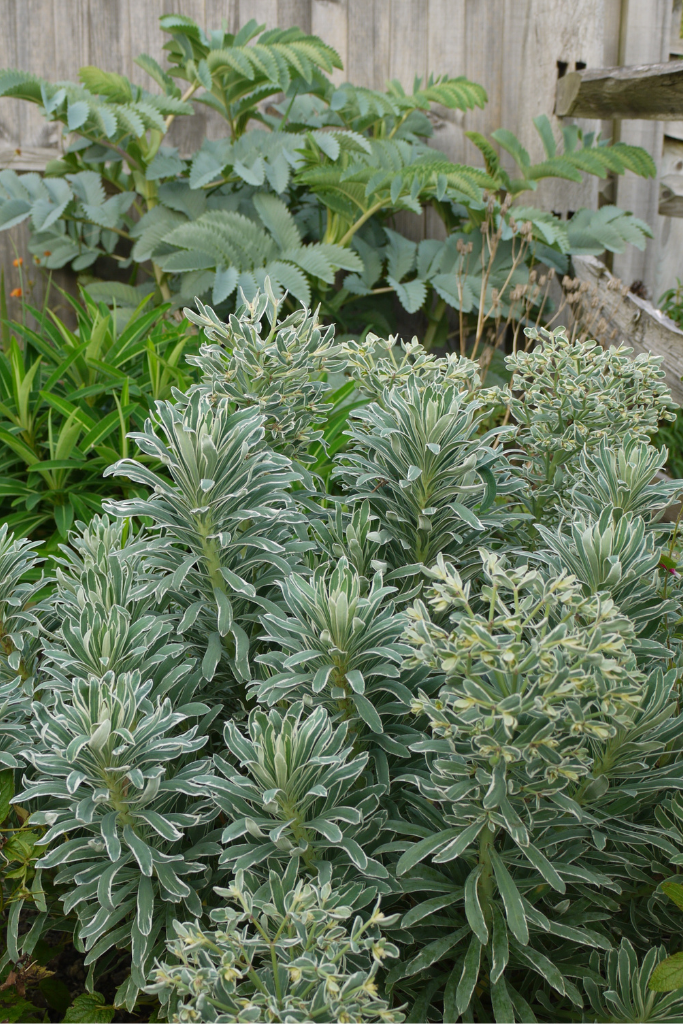
- Sunny spots: E. characias Glacier Blue is a bright variegated Euphorbia, with a glaucous green leaf, fringed with white. The soft colours work perfectly with a huge range of plants, from Roses to hardy Geraniums, Sedums to Cannas.
- Damp soils: E. griffithii x polychroma Walberton’s® Embers Glow WALEUEMGL, set to launch next year, is a long-lived garden perennial with attractive leaves and showy heads of rusty flowers in April and May – perfect for spring sales. Before the leaves drop in the autumn, they briefly turn fiery orange, giving some autumn fireworks!

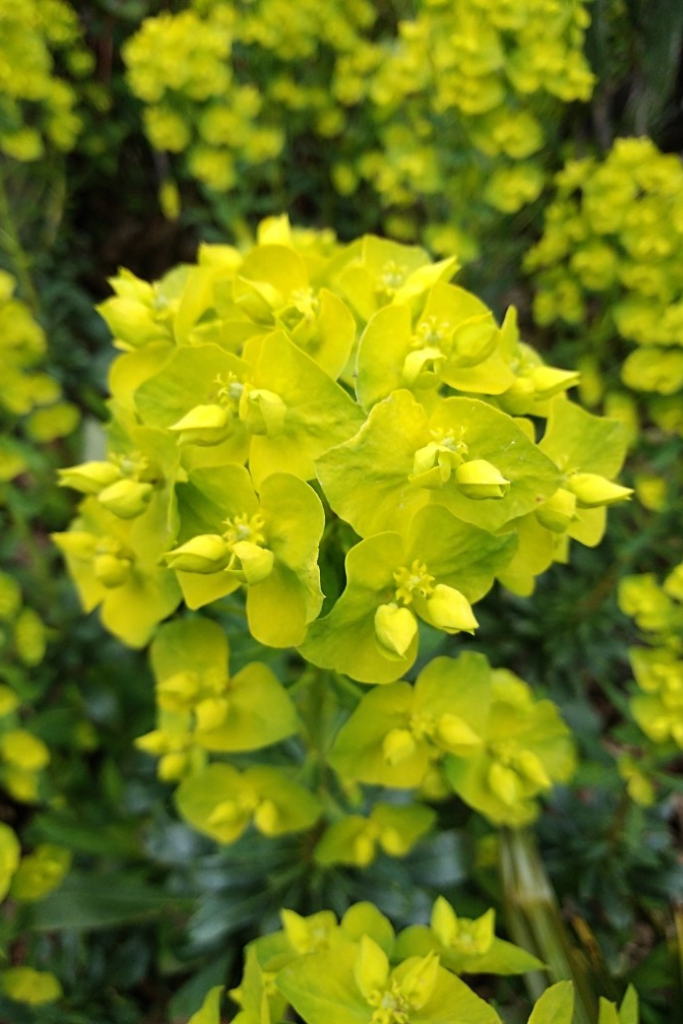
- Dry shade: Also new for 2026, E. amygdaloides var. robbiae Va Va Voom™ offers excellent ground cover, and will tolerate both damp and dry soils once established. In spring, it lights up a dark spot with vibrant lime-green flower spikes.
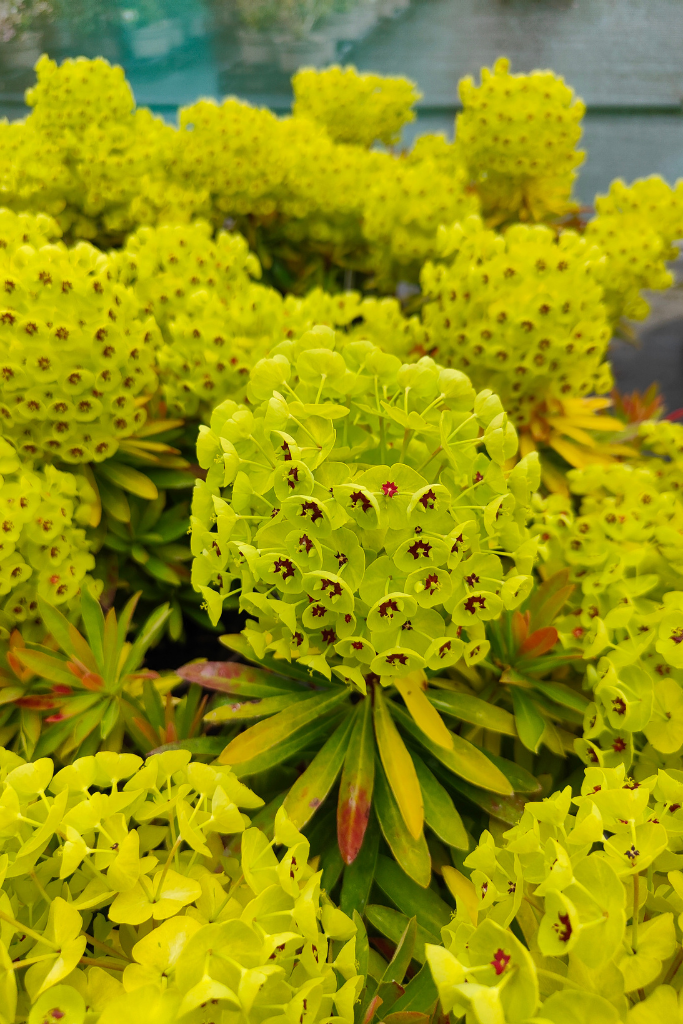
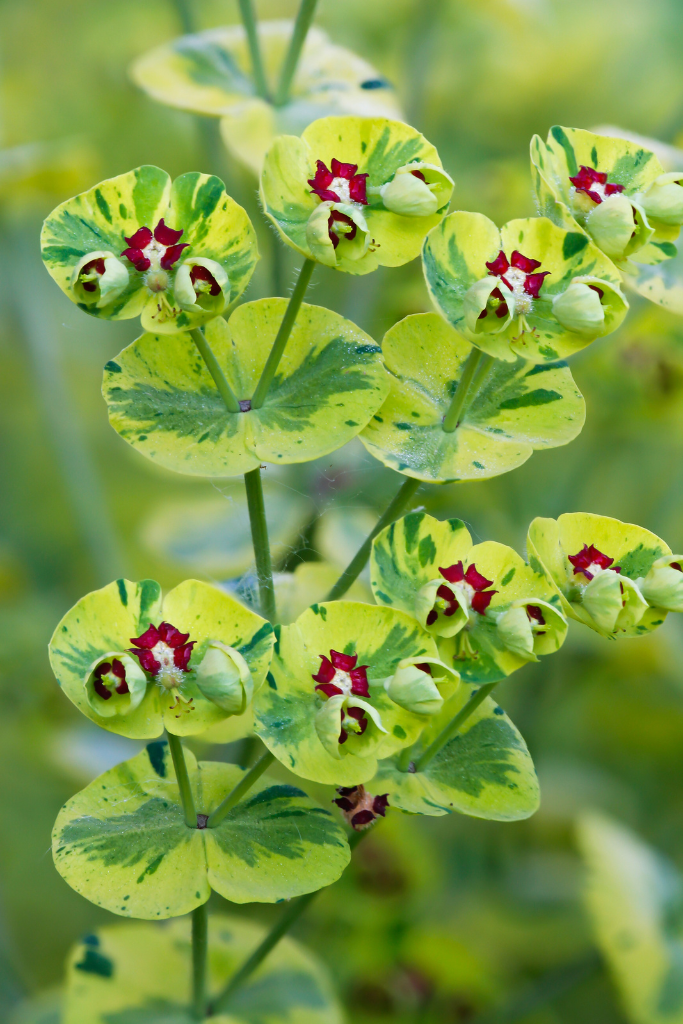
- Spring and winter interest: E. martini provides excellent foliar interest, especially during winter and spring when pots and borders can look a little bare. E. Ascot Rainbow is a firm favourite among growers and gardeners for a good reason, but have you seen the newer E. Walberton’s® Little Treasure® WALEULITR? This colour-changing cultivar glows, with pure golden yellow foliage that is particularly bright in spring, yellow flowers and rusty red young growth.
Shelf appeal for garden centres and online retailers
Euphorbias offer a very long season of interest, especially the variegated and coloured leaf varieties. Bract flowers in spring are followed by vivid foliage, which shifts to vibrant autumn colours. They can also be offered for sale throughout the year.
Euphorbias offer strong retail potential:
- Long shelf life: Evergreen foliage and long-lasting bracts ensure visual appeal from spring through autumn.
- Compact varieties: Cultivars like Walberton’s® Little Treasure® and Ascot Rainbow are ideal for containers and mixed displays.
- Low maintenance: Drought tolerance and pest resistance make them attractive to time-poor gardeners and a changing climate.
The importance of clean stock
The key to success with Euphorbias, however, is ensuring the mother stock is disease free. Many young plant growers and nurseries now work with tissue culture companies and unrooted cutting producers to ensure that the mother stock is maintained to the highest standards. Healthy plants grow more strongly, finish more quickly, have naturally better branching and offer reduced wastage and grade-out for growers. The difference is remarkable, and results in healthy, robust plants that sell themselves!
For more information on Euphorbia varieties and where to source them, contact us.
Sources:
- AGM Euphorbia RHS Grower Guide, 2017