
The EU UK SPS Agreement: What horticultural businesses need to know (so far)
Posted in Industry NewsIP Law and Administration on 18 August 2026
Published: 18/08/2026
The EU and UK are negotiating a new deal that will reshape how plants and plant products move between the two markets. Known as the EU‑UK SPS Agreement (Sanitary and Phytosanitary Agreement), it aims to bring cooperation back to areas where alignment matters most: plant health, pesticides, variety listing, and plant variety rights.
For the plant sector, this is one of the most significant regulatory shifts since Brexit. But it’s also one of the least understood, partly because negotiations are ongoing, and partly because the detail will not be published until the Agreement is signed.
This blog sets out what we know, what we don’t yet know, and what the implications may be for breeders, growers, traders and rights‑holders. We also explain how Plants for Europe has been working with The HTA and CIOPORA to ensure the sector’s voice is heard. A word of warning, however, this could all change as the negotiations progress.

What we know so far
Although the full text of the Agreement remains confidential for now, the UK government has published a list of EU legislation it expects British businesses will need to comply with once the SPS Agreement comes into force. This gives us a strong indication of the direction of travel.
1. The UK will apply EU legislation in key plant‑related areas
The Agreement is expected to cover:
- Plant health regulation
- Pesticide regulation
- National variety listing and the Common Catalogue
- Plant Variety Rights (EU Regulation 2100/94)
In practice, this means the UK will operate under EU rules in these areas, and the EU will treat the UK as if it were a Member State for the purposes of this legislation only.
2. The UK will be consulted, but will not have a vote
The UK will be able to comment on future changes to EU legislation within scope of the Agreement, but it will not have voting rights. This creates a dynamic where the UK must comply with rules it cannot directly shape.
3. The Agreement will only be published once signed
Neither side will release the text until the moment Andy Burnham and Ursula von der Leyen sign it. This means businesses must prepare for multiple possible scenarios for now.
What We Don’t Know Yet
The list of unknowns, at the moment, is significantly longer, and equally commercially important.
1. The signing date
The Agreement was originally due to be signed on 22 July 2026, but this was postponed following Andy Burnham’s appointment as Prime Minister. No new date has been announced. Current expectations suggest October or November 2026, but this is not confirmed.
2. The implementation date
Implementation was planned for July 2027. It is unclear whether the delay in signing will also delay implementation.
3. Transitional arrangements
We do not know:
- whether transitional arrangements will exist
- what they might include
- how long they might last
This matters enormously for businesses that need time to adjust systems, processes and compliance.
4. Exemptions or derogations
The UK has requested a derogation for precision‑bred crops, as UK legislation is already ahead of the EU in this area. It is unclear whether the EU will accept this.
5. The legal mechanism
We do not yet know whether the Agreement will:
- be a legally binding treaty, or
- require the UK to pass domestic legislation mirroring EU rules
The second option would require continuous updates, which would be a significant administrative burden.

Plant Health: What may change
Plant health is one of the most consequential parts of the SPS Agreement for growers, traders and propagators.
EU Plant Passports will return
We understand that EU Plant Passports will again have effect in the UK, replacing the current UK system. This means:
- Plants with valid passports will move freely between the EU and UK
- Movement will be possible in both directions
- Some crops may have limited exemptions or notification requirements
No border inspections between EU and UK
This is a major simplification. It will also make Northern Ireland trade significantly easier. But movement will not return to pre‑Brexit simplicity
Customs declarations and documentation will still be required. Plant movement will be easier, but not frictionless.
Imports from outside the EU will become stricter
The UK will revert to EU‑level import requirements, which are generally more stringent than current UK rules. Businesses importing young plants, seeds or propagation material from outside the EU will need to prepare for tighter controls.

Plant Variety Rights: Major implications ahead
This is the area with the most uncertainty, and holds the highest stakes for breeders.
EU PVR law expected to apply in the UK
The UK government has indicated that EU Regulation 2100/94 will apply. This means:
- EU Plant Variety Rights will again have legal effect in the UK
- this likely applies to all EU PVRs, not just new grants (although this is not yet confirmed)
What happens to UK PBRs?
This is unclear. Historically, when the UK was an EU Member State, UK PBRs were considered “dormant” if the same variety held an EU PVR.
We do not yet know whether:
- UK PBRs will remain valid
- UK PBRs will become dormant again
- UK‑only PBR varieties will have any protection in the EU
Our current assumption is that UK‑only PBR varieties will not be protected in the EU, but this is not confirmed.
Jurisdiction questions remain unresolved
If EU PVR law applies:
- will UK courts hear infringement cases?
- will breeders need to litigate in EU Member States?
- will appeals go to EU courts?
These questions matter for enforcement, licensing, royalty collection and breeder confidence.

Uncertainty: The sector must prepare for multiple scenarios
Negotiations may be delayed, altered, or even fail entirely. Also, no government can bind the hands of future governments, meaning:
- A future UK administration could withdraw from the Agreement
- The EU could revise its position
- The regulatory landscape could shift again
Until the Agreement is signed, published and given a confirmed implementation date, businesses must prepare for multiple possible outcomes, not a single fixed scenario. This is uncomfortable, but realistic.
The Plants for Europe take
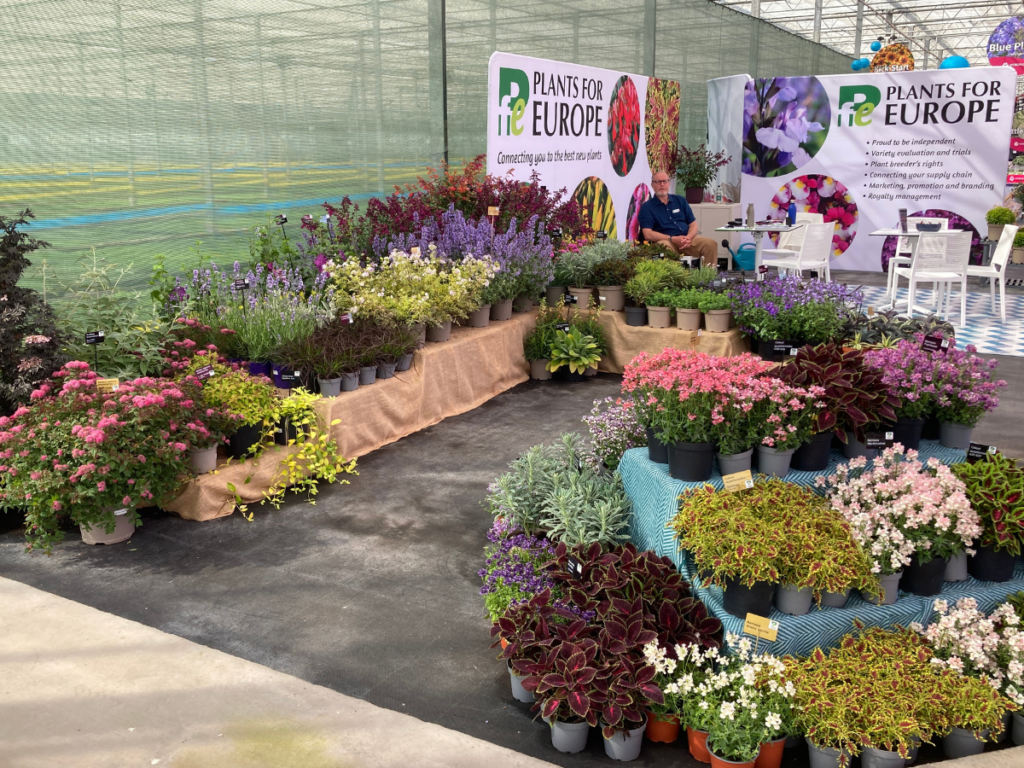
Graham has been actively supporting The HTA and CIOPORA, helping to lobby negotiators on both sides to ensure the needs of breeders, growers and rights‑holders are understood and represented.
While there is still much we don’t know, the return of plant passporting to the UK is good news, especially for plant breeders and growers looking for new varieties. Since Brexit, moving trial material of new varieties between the UK and the EU has become increasingly expensive and difficult. A return to plant passporting should smooth the way somewhat, although, as previously mentioned, customs declarations and documents will apply.
Keen to keep up to date with the latest on the SPS Agreement? We will continue to publish blogs as we hear more, however, as the Agreement is still under negotiation, the most regular updates come directly from The HTA and government channels. We recommend you subscribe to the SPA Readiness newsletter especially:
- DEFRA SPS Readiness newsletter https://pages.mailshot.defra.gov.uk/p/sps-readiness-subscribe
- DEFRA update service https://preferences.mailshot.defra.gov.uk/
- DEFRA guidance on preparing for changes https://www.gov.uk/government/publications/sps-agreement-preparing-your-business
- List of EU legislation expected to be in scope https://www.gov.uk/government/news/uk-eu-sps-agreement-legislation-in-scope
- HTA https://hta.org.uk/policy/current-issues/cross-border-trade/sps